
Advancing Global Collaboration, Strengthening Lipid Management | World-Renowned Expert Professor Kausik Kumar Ray Visits Xiamen Cardiovascular Hospital for Academic Exchange
05 July, 2026
On July 1, Professor Kausik Kumar Ray, one of the world’s foremost authorities in lipidology, visited Xiamen Cardiovascular Hospital Xiamen University (Xiamen Cardiovascular Hospital) for an in-depth academic exchange with the team led by Professor Wang Yan. The two sides held extensive discussions on the latest advances in lipid management and explored opportunities for future international collaboration.
Professor Ray is Chair of the World Heart Federation Cholesterol Roadmap, former President of the European Atherosclerosis Society (EAS), Fellow of the Academy of Medical Sciences (UK), Professor of Public Health at Imperial College London, and Honorary Consultant Cardiologist.
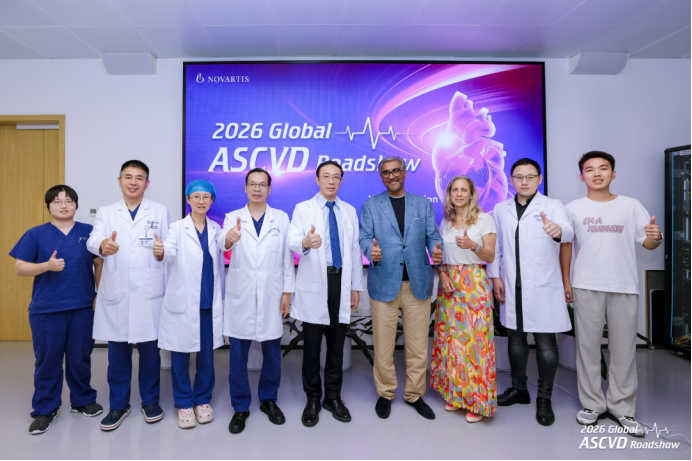
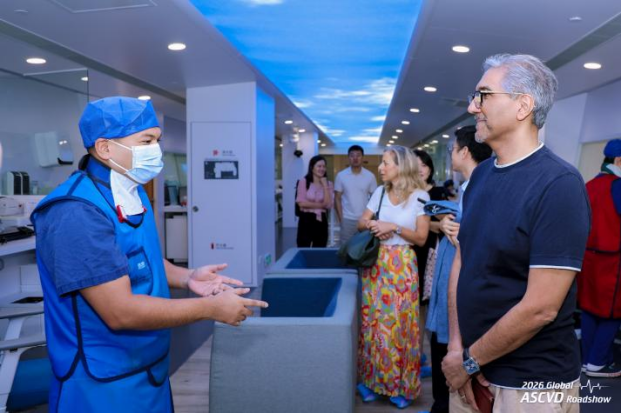
During his visit, Professor Ray toured the hospital to gain firsthand insight into the development of its National Clinical Key Specialty and its distinctive cardiovascular services. From the hospital’s AI-powered “Cloud Patient Companion” smart service platform to the “Sun Never Sets” Catheterization Laboratory, where numerous groundbreaking innovations—including the world’s first robot-assisted transcatheter mitral valve intervention—have been accomplished, and from its “1+N” multidisciplinary specialty cluster to the Heart Sapling Visiting Scholar Program (Heart Sapling Program) alumni display, Professor Ray was deeply impressed by the hospital’s advanced medical technologies, state-of-the-art facilities, and intelligent clinical workflow. He spoke highly of the hospital’s achievements in cardiovascular medicine and innovation.
Global ASCVD Academic Lecture Focuses on the Future of Lipid Management
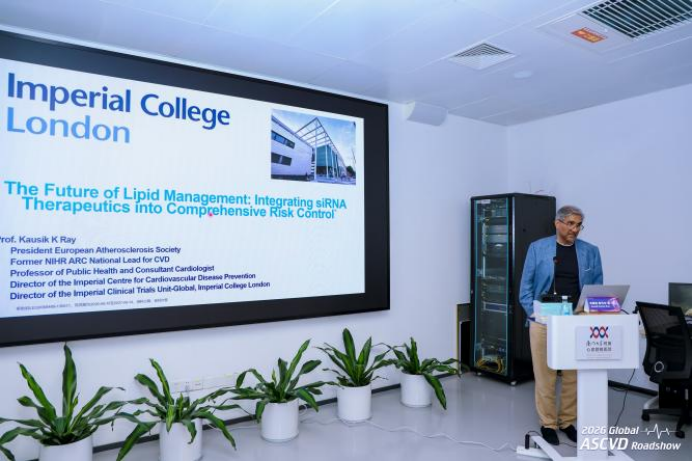
As the centerpiece of the visit, the 2026 Global ASCVD (Atherosclerotic Cardiovascular Disease) Academic Lecture Series – Xiamen Session was held at Xiamen Cardiovascular Hospital. Unlike a public lecture, this academic session was exclusively organized for key clinical specialists, research teams, and healthcare professionals involved in structural heart disease and cardiovascular medicine. Professor Ray delivered a keynote lecture entitled “The Future of Lipid Management: Integrating siRNA Therapy into Comprehensive Cardiovascular Risk Reduction.” Drawing upon extensive evidence from international multicenter clinical trials, he systematically reviewed current challenges in lipid management among patients at very high risk of ASCVD, analyzed the limitations of conventional lipid-lowering strategies, and provided an in-depth explanation of the innovative mechanisms and clinical value of long-acting small interfering RNA (siRNA) therapies. His presentation offered new international perspectives for the personalized management of patients with complex, high-risk cardiovascular diseases and highlighted future directions in preventive cardiology.
Case-Based Discussion Promotes Academic Exchange and Clinical Consensus
During the subsequent case discussion session, Professor Wang Yan’s team shared Xiamen Cardiovascular Hospital’s extensive clinical experience in lipid management. Together with Professor Ray and his team, participants engaged in in-depth discussions on several key topics, including:
* Early intensive lipid-lowering therapy for acute coronary syndrome (ACS);
* Precision lipid management strategies for critically ill cardiovascular patients;
* Emerging research directions in gene-editing technologies for cardiovascular lipid disorders.
Focusing on real-world clinical challenges and the latest scientific advances, participants actively exchanged ideas, raised questions, and shared practical experiences. The discussion effectively addressed many longstanding clinical challenges related to long-term lipid management and individualized treatment strategies for high-risk patients, fostering academic innovation while building broader consensus on evidence-based clinical practice.
Connecting with Global Expertise to Enhance Local Cardiovascular Care
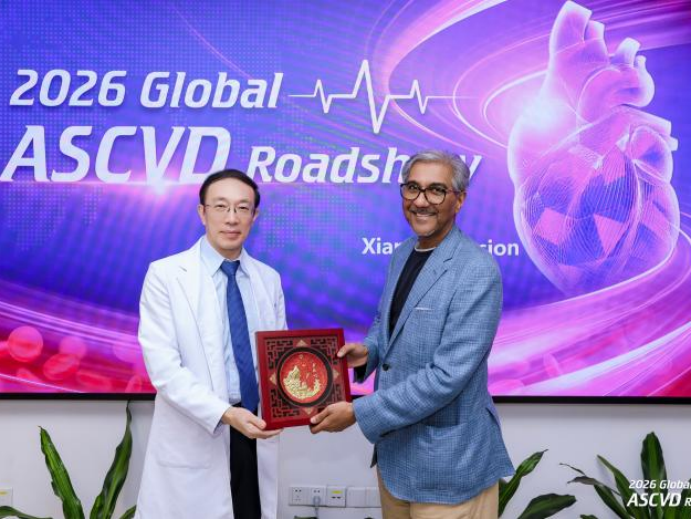
The visit by Professor Ray represents another important milestone in Xiamen Cardiovascular Hospital Xiamen University (Xiamen Cardiovascular Hospital)’s ongoing efforts to strengthen international academic collaboration.
As a Sub-center of the National Clinical Research Center for Cardiovascular Diseases and a National Regional Medical Center for Cardiovascular Diseases jointly established by the National Health Commission and Fujian Province, the hospital continues to expand its partnerships with leading international academic organizations.
This visit has established a direct channel for future scientific collaboration between the hospital and the European Atherosclerosis Society (EAS), creating new opportunities for joint research, academic exchange, and clinical innovation.
Looking ahead, Xiamen Cardiovascular Hospital will continue to translate cutting-edge international expertise into localized clinical practice, enabling more patients to benefit from world-class, comprehensive lipid management services without leaving their hometowns.
About Professor Kausik Kumar Ray
Professor Kausik Kumar Ray is an internationally recognized authority in the field of atherosclerotic cardiovascular disease. He ranks among the top 0.1% of the world’s most highly cited researchers in medicine, according to Clarivate Analytics, and previously served as President of the European Atherosclerosis Society (EAS). He has also led multiple landmark global clinical trials within the ORION research program.

Professor Ray has authored more than 200 high-impact publications in leading international medical journals, including The New England Journal of Medicine, The Lancet, and the European Heart Journal.
His research spans a wide range of areas, including:
* Atherosclerotic cardiovascular disease (ASCVD)
* Familial hypercholesterolemia
* Metabolic disorders
* Comprehensive cardiovascular risk management
Many of his research findings have directly influenced international clinical guidelines and provided critical evidence supporting the global prevention and management of cardiovascular diseases.
share


Latest News
-
05 July, 2026
Advancing Global Collaboration, Strengthening Lipid Management | World-Renowned Expert Professor Kausik Kumar Ray Visits Xiamen Cardiovascular Hospital for Academic Exchange


-
10 June, 2026
Across the Taiwan Strait, United by the Heart: Mainland Cardiovascular Experts Gather in Chinese Taipei for Academic Exchange
-
09 June, 2026
Xiamen Cardiovascular Hospital Invited to Participate in the 2026 China–Latin America Dialogue on Governance Experience Sharing and Mutual Learning Among Civilizations