
Crossing Mountains and Seas to Share China's Innovative Techniques XMCH's High-Difficulty Tricuspid TEER Procedure Broadcast Live to an Academic Conference in India
31 July, 2026
On July 1, Professor Kausik Kumar Ray, one of the world’s foremost authorities in lipidology, visited Xiamen Cardiovascular Hospital Xiamen University (Xiamen Cardiovascular Hospital) for an in-depth academic exchange with the team led by Professor Wang Yan. The two sides held extensive discussions on the latest advances in lipid management and explored opportunities for future international collaboration.
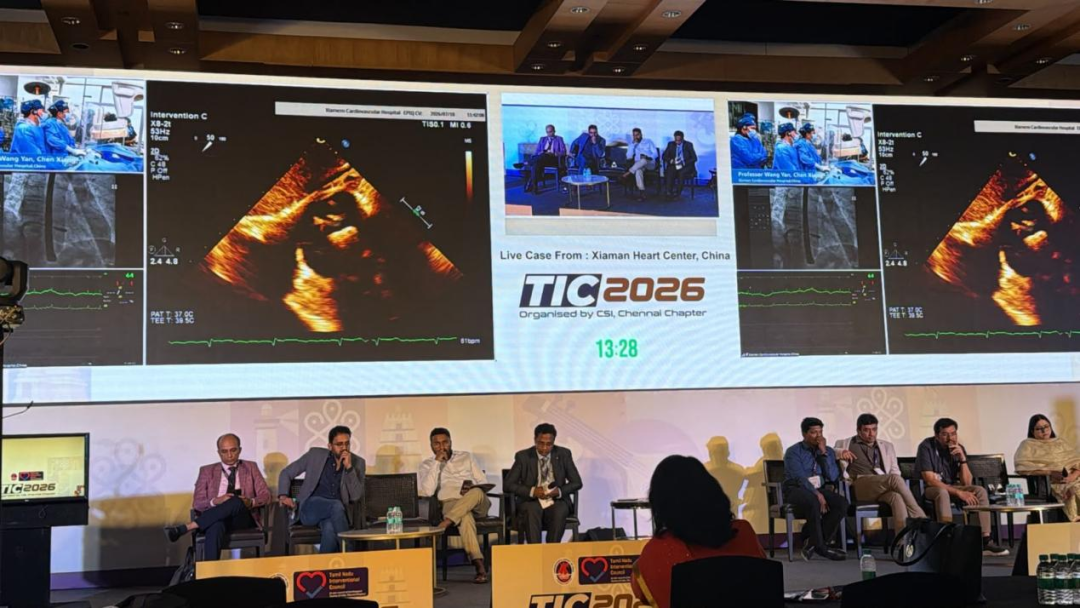
Notably, following the successful completion of this international live surgical broadcast, the NeoBlazar® Transcatheter Tricuspid Valve Clip System officially received market approval from China’s National Medical Products Administration (NMPA) on July 20. As the third transcatheter tricuspid edge-to-edge repair device in the world to receive regulatory approval for marketing, its successful launch completely filled the gap in domestically developed technologies for tricuspid valve interventional treatment in China. The cross-border live broadcast not only provided a direct demonstration of the excellent clinical applicability of this domestically developed innovative device in complex anatomical settings, but also served as a vivid example of China’s high-end medical technologies and treatment solutions accelerating their expansion overseas and contributing to the development of global interventional cardiac care.
Faced with such a challenging clinical situation, the structural heart disease team led by Professor Yan Wang at XMCH conducted multiple rounds of in-depth discussions and ultimately formulated a precise, cautious, and individualized procedural strategy. The team decided to first implant a 6-mm-wide clip at the core area of anteroseptal regurgitation. Based on the real-time improvement in regurgitation following implantation, they would then dynamically assess whether further treatment of the regurgitation at the posteroseptal location was necessary.
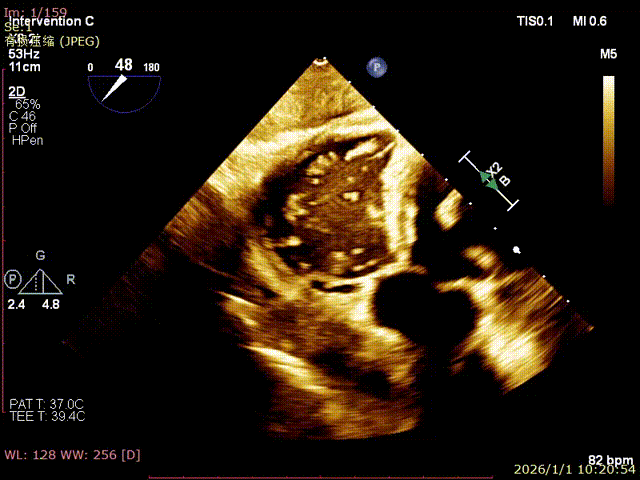
Posteroseptal malcoaptation visible → Decide to grasp the anteroseptal portion first → Assess afterward and grasp the posteroseptal portion if necessary.
During the live procedure, drawing on extensive clinical experience and refined technical expertise, Professor Wang’s team precisely identified the trajectory and direction intraoperatively, successfully crossed the tricuspid valve, guided the clip accurately to the site of anteroseptal regurgitation, and completed deployment.
Following the procedure, Professor Wang summarized and commented on this highly challenging case. He pointed out that the patient’s unusual anatomical characteristics posed major challenges to both the operator’s technical skills and the device’s adaptability. Thanks to its excellent design, the domestically developed device achieved precise implantation within a limited grasping area, not only effectively improving the patient’s severe regurgitation but also ensuring steady improvement in cardiac function. Professor Wang emphasized that the successful treatment of this case fully validated the clinical applicability of domestically developed tricuspid valve interventional devices in complex anatomical settings and provided an important reference for the treatment strategies of similarly challenging cases.
The successful completion of this high-difficulty procedure and its cross-border live broadcast received high praise from experts attending TIC 2026. Dr. Rajaram Anantharaman, Director of Transcatheter Heart Valve Therapy at Kauvery Hospital, India, as well as Joint Organizing Secretary and Chief Organizer of the TIC 2026 Structural Heart Intervention session, served as the moderator for the live surgical session and spoke highly of the procedure. He commented:
“It was a fantastic case of Tricuspid TEER with Neoblazar, with excellent demonstration and great 3D images, with excellent outcome.”
This was described as an outstanding demonstration of NeoBlazar tricuspid TEER, featuring excellent 3D imaging assessment and an excellent clinical outcome.Dr. Anantharaman also noted that the procedure not only allowed Indian colleagues to directly appreciate the strong capabilities of China’s domestically developed medical devices, but also provided a highly valuable innovative solution for tricuspid valve intervention, which is still at an early stage of development in India. Finally, on behalf of the TIC 2026 team, he extended sincere congratulations to the XMCH team led by Professor Yan Wang and expressed his hope that the two sides would continue to deepen their collaboration and share knowledge and experience in the field of structural heart intervention.
As a leading domestic center for the interventional diagnosis and treatment of structural heart disease, Xiamen Cardiovascular Hospital, Xiamen University has long undertaken the clinical validation of domestically developed innovative devices as well as international academic exchange initiatives. Leveraging XMCH’s strong structural heart disease clinical platform and international academic exchange channels, China’s high-end medical devices are continuing to expand globally, providing better treatment options for more patients with complex cardiovascular diseases worldwide and advancing the global reach of China-developed high-end medical technology.
Source: Yandao Medical Voice Network (严道医声网)
share


Latest News
-
24 August, 2026
PulseDriven Collaboration: Professor Andreas Götte Visits Xiamen Cardiovascular Hospital Xiamen University to Discuss Frontiers and Clinical Pra


-
19 August, 2026
Crossing Mountains and Seas for Mutual Learning: Experts from Cho Ray Hospital, Vietnam Visit Xiamen Cardiovascular Hospital Xiamen University to Observe HighRisk PCI Procedure Supported by CorVad 4.0
-
31 July, 2026
Crossing Mountains and Seas to Share China's Innovative Techniques XMCH's High-Difficulty Tricuspid TEER Procedure Broadcast Live to an Academic Conference in India