
China’s Homegrown Innovation Shines on the Global Stage | Prof. Wang Yan’s Team Invited by CSI Germany to Perform Live Global Broadcast of K-Clip Transcatheter Tricuspid Annuloplasty
05 June, 2026

When Chinese physicians stand under the spotlight of the international academic stage, demonstrating a cardiac interventional device developed entirely in China to the world, it represents not only a showcase of technological innovation, but also a powerful expression of confidence in Chinese medical innovation.
On June 3, 2026 (Beijing Time), the CSI (Congenital and Structural Interventions) International Conference was held in Frankfurt, Germany. As one of the key scientific sessions dedicated to tricuspid valve repair, the conference invited Professor Wang Yan and his team from Xiamen Cardiovascular Hospital of Xiamen University (Xiamen Cardiovascular Hospital) to perform a live global broadcast of a Transcatheter Tricuspid Valve Annuloplasty (TTVA) procedure using the K-Clip system in a patient with severe functional tricuspid regurgitation. The live case discussion was moderated by internationally renowned experts including Prof. Matthew Price, Prof. Eberhard Grube, and Prof. Antonio Colombo.
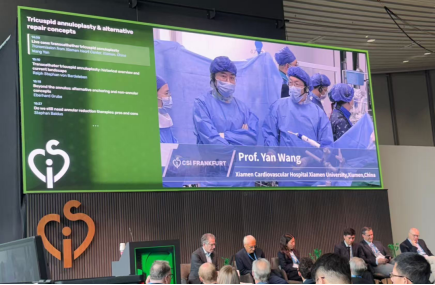
Broadcast live from Xiamen Cardiovascular Hospital, Professor Wang Yan’s team successfully completed this highly challenging transcatheter tricuspid annuloplasty procedure. The patient presented with multiple complex valvular diseases, having undergone bioprosthetic mitral and aortic valve replacement 11 years earlier, followed by transcatheter mitral valve-in-valve implantation three months prior due to degeneration of the bioprosthetic mitral valve.
The case was exceptionally challenging because of severe tricuspid leaflet tethering with a massive coaptation gap, accompanied by cardiac malposition that resulted in an unfavorable angle between the superior vena cava and the tricuspid annular plane. This significantly limited catheter maneuverability during the procedure, while the previously implanted metallic valve frame also compromised echocardiographic visualization.Drawing on extensive experience in structural heart interventions and precise intraoperative decision-making, Professor Wang Yan’s team maximized the performance of the K-Clip, a Chinese-developed device designed around the concept of physiological annular repair. The procedure successfully achieved effective annular reduction and was completed in just 30 minutes.
During the post-procedural discussion, conference moderators praised the procedure as a “Wonderful Case,” once again demonstrating to the international community the outstanding capabilities of both China's original medical device innovation and its cardiovascular intervention specialists.
Procedure Highlights: Precision Manipulation for Physiological Repair
Faced with this highly complex anatomical presentation, conventional treatment strategies would have been extremely challenging. Following a comprehensive preoperative evaluation, the Xiamen Cardiovascular Hospital team elected to perform the intervention using K-Clip, China's first domestically developed transcatheter tricuspid annuloplasty system.
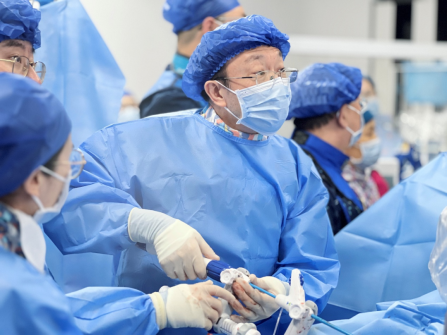
The procedure was carried out smoothly and efficiently. Within a remarkably short time, the team achieved precise device implantation, fully demonstrating K-Clip's unique design advantages of accurate anchoring and effective annular reduction. By restoring the geometry of the tricuspid annulus while preserving the native valve, the system embodies the concept of physiological valve repair.
International Experts Praise the Concept of Physiological Repair
Following the live case, experts from around the world engaged in an in-depth discussion of the procedure and highly commended both the clinical strategy and the device's innovative design.
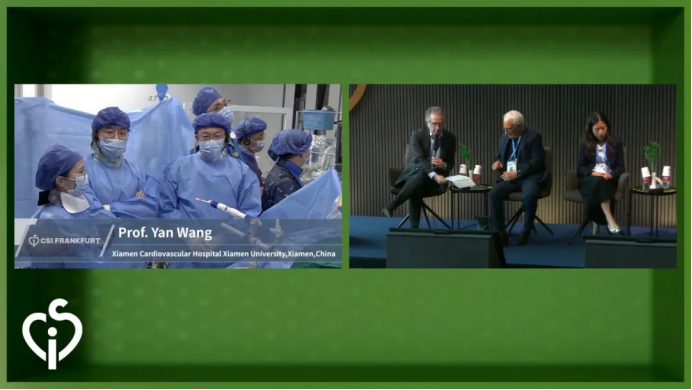
Experts unanimously agreed that K-Clip represents a repair solution that truly respects the physiological anatomy of the tricuspid valve. Rather than functioning merely as a device to reduce regurgitation, its greatest value lies in restoring the tricuspid annulus to a more physiological configuration. For one of the most difficult patient populations in clinical practice—those with markedly dilated tricuspid annuli, extremely large coaptation gaps, or severe leaflet tethering that precludes adequate leaflet coaptation, and for whom few effective treatment options currently exist—K-Clip offers several unique advantages: Anatomical Reconstruction: Instead of simply reducing regurgitation, K-Clip reshapes the tricuspid annulus at its anatomical origin through effective annular reduction.
Creating Future Therapeutic Opportunities: Experts noted that by reducing annular size and improving valve anatomy, K-Clip may facilitate future transcatheter interventions, such as edge-to-edge repair (TEER), thereby expanding treatment options for patients with complex tricuspid valve disease. This treatment philosophy—addressing the patient's current regurgitation while creating opportunities for future therapies—received widespread recognition from the international faculty.
Showcasing China's Original Innovation: From "Made in China" to "Innovated in China"
The invitation from the CSI Conference to broadcast this procedure live represents not only international recognition of the clinical expertise of the structural heart team at Xiamen Cardiovascular Hospital, but also a major milestone for K-Clip as a Chinese-developed medical device on the global stage.
From Innovation to Global Impact
The successful live broadcast of this procedure marked another important milestone in the clinical application of K-Clip for the treatment of complex tricuspid valve disease. More importantly, it demonstrated China's growing ability to develop original medical technologies capable of addressing globally recognized clinical challenges. For many years, transcatheter treatment of tricuspid valve disease has remained one of the most demanding frontiers in structural heart intervention. Featuring its innovative helical anchoring mechanism and the concept of physiological annular reduction, K-Clip has broken away from conventional design approaches adopted by existing international devices, establishing a uniquely Chinese path toward innovation in structural heart therapy.
From its outstanding performance in the operating room to the unanimous recognition of its physiological repair concept by leading international experts, this achievement showcased the strength of both Chinese physicians and Chinese-developed medical devices on the world stage. It reflects China's remarkable progress in high-end medical device innovation—from following international advances, to competing alongside global leaders, and increasingly contributing original solutions that shape the future of cardiovascular intervention. Precision defines excellence in cardiac intervention, while innovation drives medical progress.
The success of this globally broadcast procedure not only advances the clinical application of K-Clip in the treatment of complex tricuspid valve disease, but also highlights the growing contribution of Chinese innovation to solving worldwide clinical challenges. As additional clinical evidence continues to accumulate, K-Clip is expected to benefit increasing numbers of patients with severe tricuspid regurgitation around the world, bringing a Chinese innovation to the forefront of global structural heart disease therapy.
share


Latest News
-
05 July, 2026
Advancing Global Collaboration, Strengthening Lipid Management | World-Renowned Expert Professor Kausik Kumar Ray Visits Xiamen Cardiovascular Hospital for Academic Exchange


-
10 June, 2026
Across the Taiwan Strait, United by the Heart: Mainland Cardiovascular Experts Gather in Chinese Taipei for Academic Exchange
-
09 June, 2026
Xiamen Cardiovascular Hospital Invited to Participate in the 2026 China–Latin America Dialogue on Governance Experience Sharing and Mutual Learning Among Civilizations