A Heartbeat Across the Ocean
My name is Mercedes Menjivar.
I am a doctor from El Salvador. For most of my life, I stood on the other side of the hospital bed — listening, diagnosing, comforting, treating. I never imagined that one day, I would become the one holding onto hope as a patient.
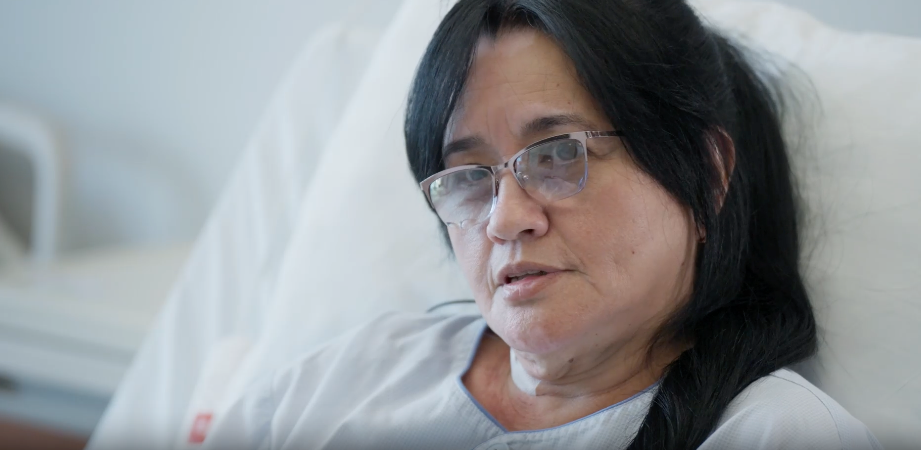
About ten years ago, I was diagnosed with mitral regurgitation. At first, it was something I could live with. I continued working, caring for others, telling myself it was under control. But slowly, quietly, my world began to shrink. By 2024, even the simplest things felt heavy — walking a short distance, climbing a small slope, taking a deep breath. My heart was failing me, and with it, my sense of normal life.
Back home, after all the tests and evaluations, the conclusion was clear: open-heart surgery.
As a doctor, I understood what that meant. As a patient, I was terrified. The risks, the recovery, the uncertainty — it felt overwhelming.
Then something unexpected happened.
Some of my colleagues from Rosales National Hospital had just returned from training in China, at Xiamen Cardiovascular Hospital Xiamen University — also known as Xiamen Heart Center. They spoke about new technologies, new approaches, and new possibilities that simply didn’t exist in our country yet.
One of them was my colleague and friend, Dr. Ricardo Castillo. After six months of advanced training in Xiamen, he examined me using transesophageal ultrasound. His diagnosis was clear and precise: mitral valve prolapse with moderate-to-severe regurgitation.
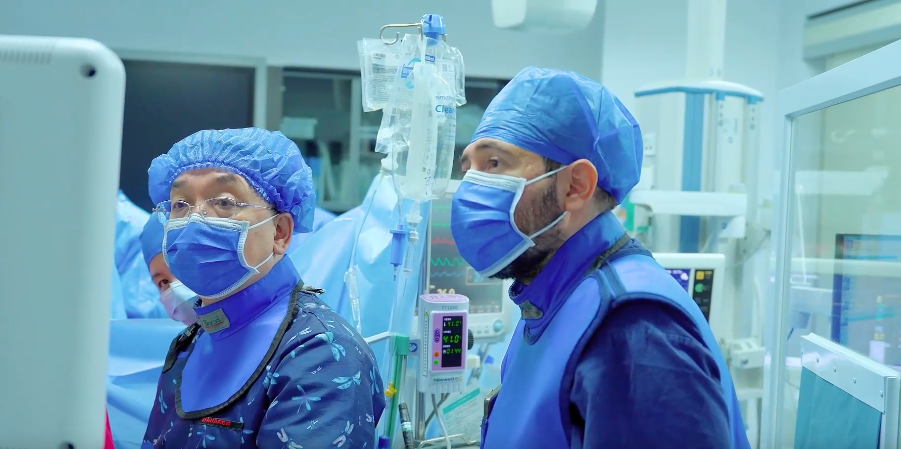
For the first time in a long while, I felt something I hadn’t felt in months — not fear, but possibility.
My case was sent by the Salvadoran Ministry of Health to the medical team in Xiamen for an online consultation. Their conclusion changed everything: I was a candidate for a minimally invasive transcatheter mitral valve procedure — no open-heart surgery.
Hope is a powerful thing.
So is fear.
The idea of traveling over 15,000 kilometers to a foreign country for heart treatment was frightening. I didn’t know the language. I didn’t know the culture. I didn’t know what awaited me. But I knew one thing — this was my chance to live differently, to breathe freely again, to reclaim my life.

On November 19, 2024, I boarded a plane to Xiamen with a heart full of fear — and faith. From the moment I arrived, something changed. The hospital didn’t feel cold or distant. It felt human.
The nurses held my hand. The staff stayed with me. They spoke gently, smiled warmly, and reassured me constantly. One nurse looked at me before the procedure and said, “Don’t be nervous. Our doctors will be with you the entire time. Everything will be okay.”

Outside the operating room, they cheered me on. Not like medical staff — but like family.

In that moment, I wasn’t a foreign patient.
I wasn’t a case file.
I was simply a human being being cared for.
The procedure itself felt like a miracle of teamwork and precision. A multidisciplinary team worked in perfect harmony — anesthesia, imaging, intensive care, nursing — led by Wang Yan. In just 45 minutes, my heart was changed.
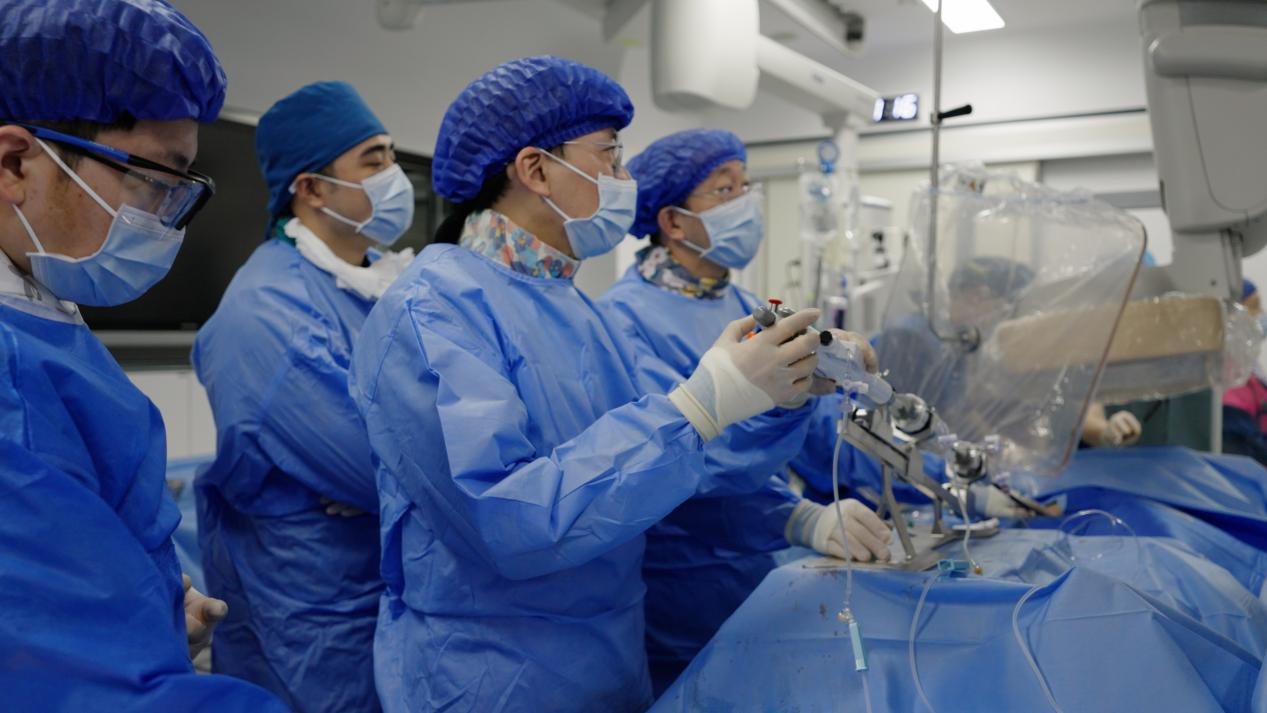
Ten minutes after the procedure, I was awake.

Six hours later, I was walking. I couldn’t believe it.
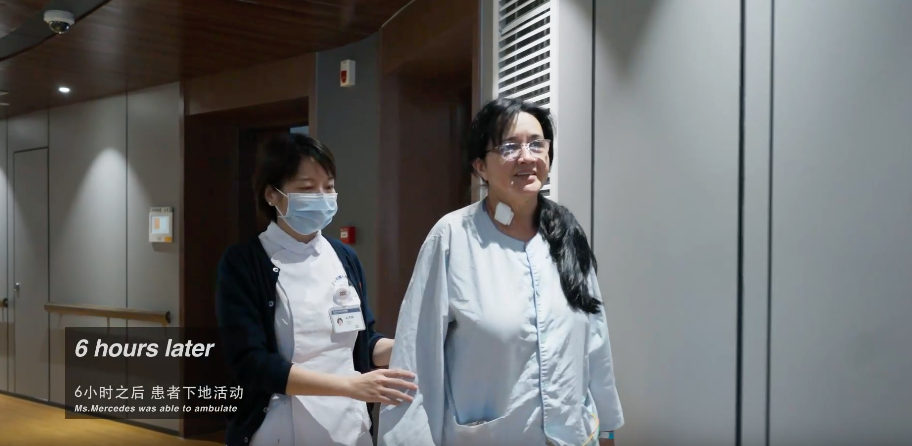
In the days that followed, I felt something I hadn’t felt in years: lightness.
Breathing was easy.
Walking was easy.
Living felt easy again.
It felt like a rebirth — not just physical, but emotional.
This journey was not only about medicine.
It was about connection.
It was made possible by the Heart Sapling Visiting Scholar Program, which had already planted a seed of knowledge in my country. Doctors trained in Xiamen returned home with skills, vision, and expertise — and one of those seeds saved my life.

As Ambassador Zhang Yanhui once described, this is part of the “Healthy Silk Road”.

But to me, it is something simpler:
It is proof that compassion travels.
That knowledge travels.
That hope travels.
That hearts connect — across borders, languages, and oceans.
Today, I don’t just have a healthier heart.
I have a new outlook on life.
I tell every patient who is afraid:
Don’t give up.
Don’t stop searching for hope.
Don’t be afraid of distance if it leads you to healing.
My journey wasn’t just about repairing a valve —
It was about discovering how deeply connected our world truly is.
This wasn’t just a medical success story.
It was a human one.
A story of courage, kindness, and a heartbeat that crossed oceans — and came back stronger.